

President Donald Trump is set to visit China from May 13 to 15, a trip that underscores a dramatic shift in his approach to the world’s second-largest economy. After a tense period marked by aggressive tariffs—including a nearly 150% levy on Chinese goods during the so-called “Liberation Day” tariffs in April 2025—Washington has since softened its stance, following Beijing’s firm yet measured countermeasures. Multiple rounds of trade talks have led to a temporary truce, with the latest round set for May 12–13 in South Korea.
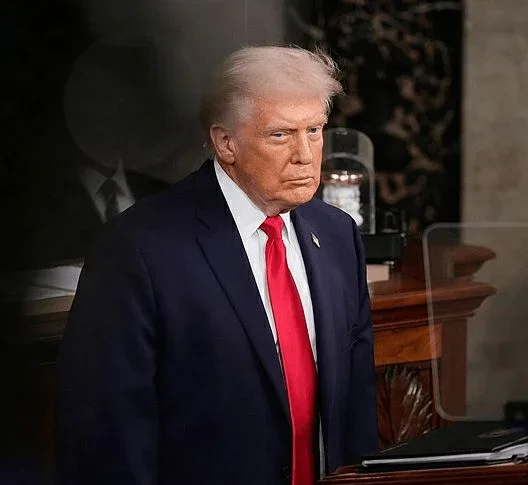
The evolution of Trump’s China policy has puzzled many. Reports from *The New York Times* and *The Wall Street Journal* suggest that Chinese retaliation and Trump’s own transactional nature drove the pivot, but little attention has been paid to the inner circle shaping these decisions. Experts interviewed by The Paper, including Diao Daming of Renmin University and Sun Yun of the Stimson Center, argue that in Trump’s second term, the president himself remains the dominant force on China policy. “The China policy of this administration is Trump’s China policy,” Sun said. “Everyone else plays a supporting role.”
While hawkish figures like Secretary of State Marco Rubio, National Security Advisor Mike Waltz, and Defense Secretary Pete Hegseth initially appeared to dominate the administration, Trump’s preference for deal-making over ideology has tempered their influence. In April 2025, key hardliners such as David Feith and other advisers were dismissed, and the National Security Council’s Technology and National Security Directorate was dissolved. Waltz was later moved to the UN ambassador role. In contrast, more pragmatic voices, including Treasury Secretary Scott Bessent, reportedly urged Trump to ease tariffs to secure rare mineral supplies after China restricted rare earth exports.
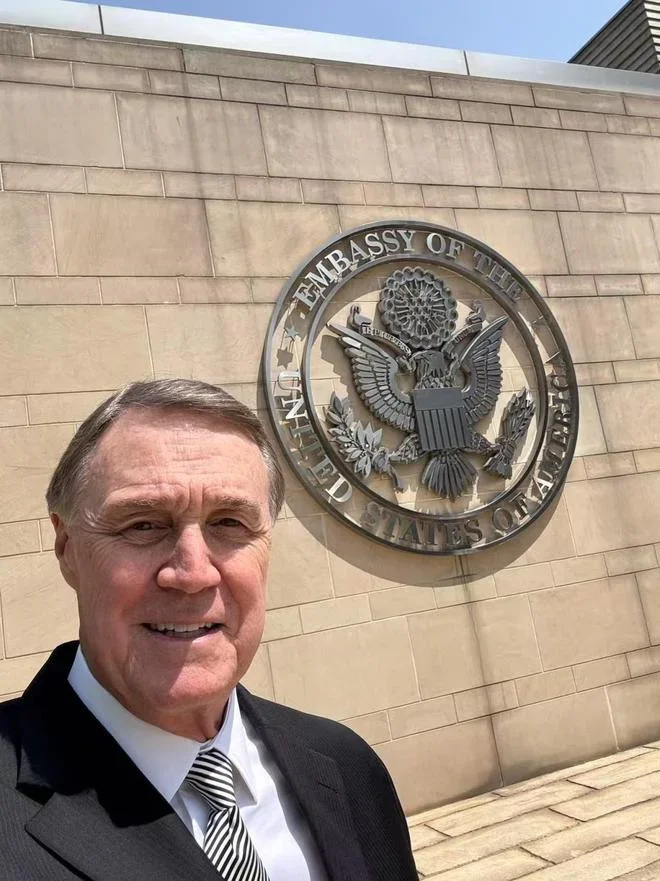
Diao noted that government departments seem to be competing to implement Trump’s vision most effectively. “Whoever executes his policy best may gain his trust and then influence future decisions,” he said. Among Trump’s new inner circle, Ambassador to China David Perdue and Senator Steve Daines stand out. Perdue, a former businessman and senator, swore in at the Oval Office—a rare honor—underscoring his direct line to Trump. Unlike previous envoys, Perdue is seen as a personal representative of Trump’s commercial interests. “His phone likely rings directly to the White House, not the State Department,” Diao explained.
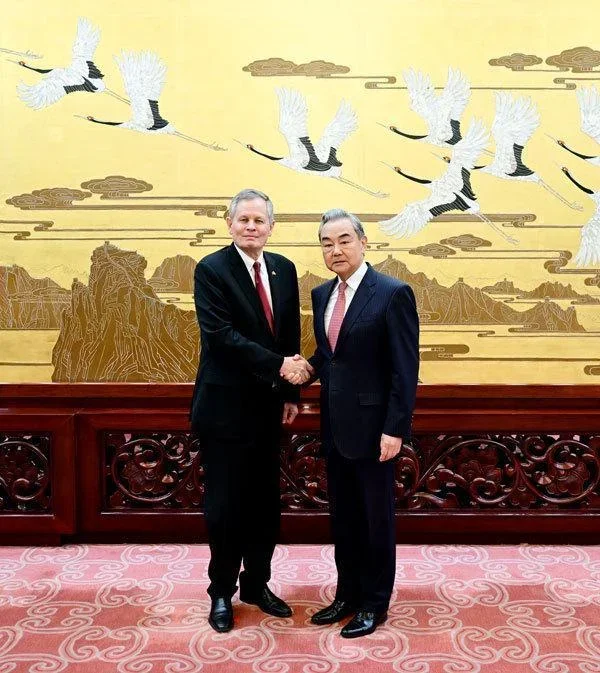
Since arriving in Beijing in May 2025, Perdue has met with top Chinese officials, including Foreign Minister Wang Yi and Commerce Minister Wang Wentao, and traveled extensively across China. He has also engaged with U.S. business groups, reinforcing his role as a bridge between the two sides. Senator Daines, a long-time Trump ally with business experience in China, has also played a key role. He visited Beijing in March 2025 and again in early May, leading a bipartisan delegation ahead of Trump’s trip. Analysts say Daines’ access to both Trump and Chinese leaders makes him an indispensable intermediary.
Despite Trump’s unpredictable style, experts see stability in U.S.-China relations. “Trump ultimately chose strategic stability, not confrontation,” Sun said, noting that his second term has avoided the worst-case scenarios many feared. Diao added that China can even help shape Trump’s policies by making him feel in control. “If Trump believes his approach benefits America, uncertainty can be managed,” he said.
As Trump prepares to land in Beijing, the world watches to see whether this carefully calibrated approach will hold—or if the president’s instincts will again upend the fragile balance.
