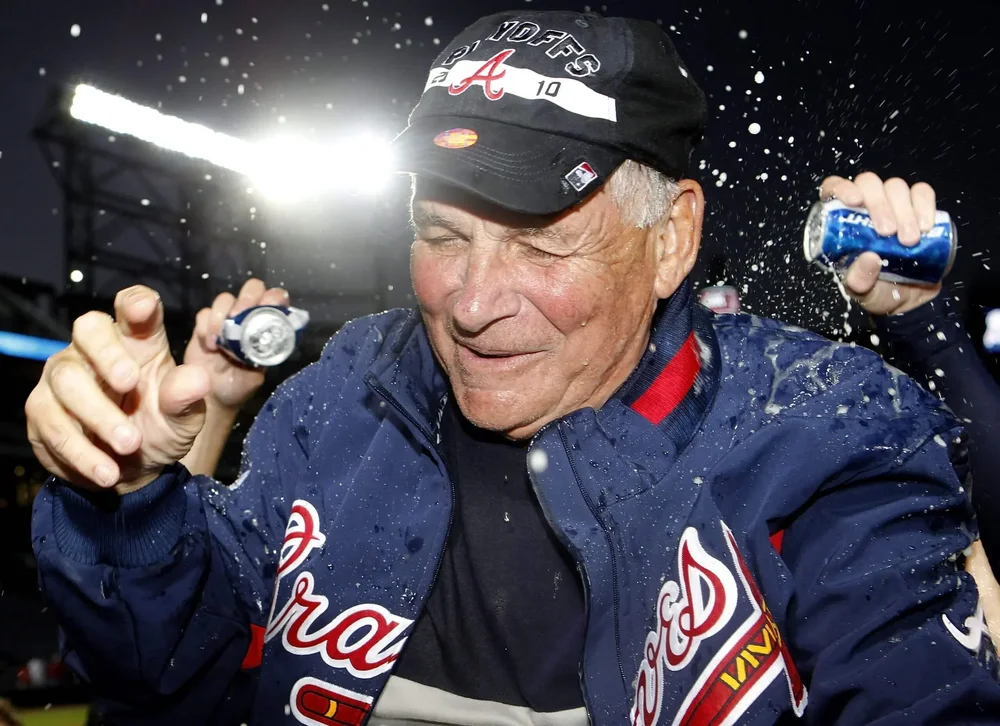

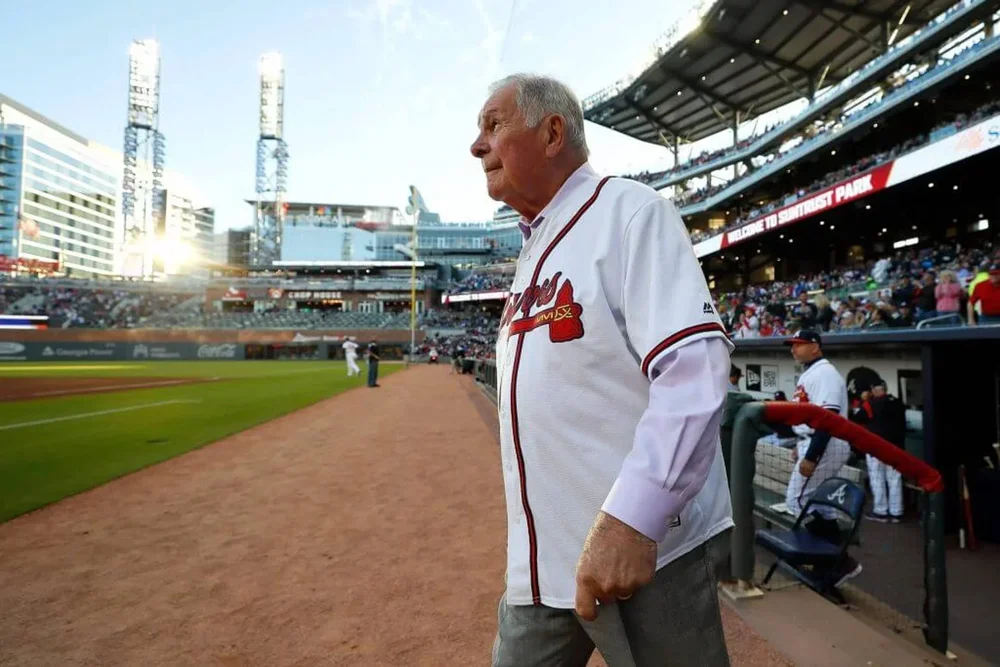
Bobby Cox led the Braves to six seasons with 100 or more wins during his managerial tenure.
Kevin C. Cox / Getty Images
LOS ANGELES — Freddie Freeman’s path to a Hall of Fame career is deeply tied to his years with the Atlanta Braves, and consequently, to the lessons imparted by his first major league manager, Bobby Cox.
Even now, Freeman refuses to wear his cap backward. When not using his sunglasses, he places them on his cap with the lenses facing forward, rather than covering the Los Angeles Dodgers logo he now wears. The uniforms he has worn over 17 big-league seasons carry meaning, just as the standard Cox set across 29 seasons as a manager—25 of them over two stints in Atlanta—remains significant.
“That’s Bobby,” Freeman said. “Bobby still lives within me. He was a wonderful man who taught us lessons about camaraderie, unity, and working as a team, with no one being treated differently. That’s how I was raised in the game, and that’s what Bobby instilled there. I still appreciate it today.”
Reflections poured from Freeman on Saturday, before he faced his former team, just hours after Cox’s passing at age 84 that morning. The Hall of Fame manager began his professional baseball career in 1960 as a minor league infielder in the Dodgers organization and ended it in 2010, overseeing Freeman’s first month in the majors.
“I mean, not many people get to be managed at all by a Hall of Fame manager,” Freeman said. “And I got to have my first one in the big leagues be a Hall of Fame manager, a manager who relentlessly had our backs. We’re going to miss him immensely.”
Freeman, then 20, made his debut on September 1, 2010, batting sixth and playing first base. He recalled sitting in front of his locker that afternoon, his stomach churning with nervous energy to the point he thought he might be sick. Then he heard Cox’s voice.
“‘Gosh dang it, Free, what took you so long to get here to the big leagues?’” Freeman remembered Cox saying.
“He used some other choice words,” Freeman added, “but all the nerves disappeared instantly because of the way he handled it.”
Cox always stood up for his players. Online compilations lasting half an hour feature his ejections and exchanges with umpires, many of which were simply a manager showing his team he had their support. That message resonated with Freeman in every conversation he had on Saturday, starting from the moment longtime Braves coach Eddie Pérez called him with the news.
Bobby Cox, known for fiercely protecting his players with a record 162 ejections, was equally celebrated by his team. (Mike Zarrilli / Getty Images)
Remembering Cox comes naturally, Freeman told former Braves manager Brian Snitker, who spent much of his nearly half-century with the organization alongside Cox. During his usual pregame drills, Freeman shared stories with first-base coach Chris Woodward—a former Brave himself—about how Cox got himself ejected from a game to defend the then-31-year-old Woodward.
“I think that’s the key: he just cared,” Freeman said. “You take lessons from certain managers, teammates, and people you encounter, and the genuine care Bobby had for every single person who walked through the clubhouse, onto the field, or crossed his path—that’s what you want to take from him.”
Freeman was still a teenager when he attended his first major league spring training in 2009, entering Atlanta’s old spring clubhouse in Orlando, Florida, alongside fellow Braves top prospect Jason Heyward. Cox’s presence was unmistakable, but the World Series-winning manager, who ranks fourth all-time in wins, was quick to break the ice.
Cox’s influence continues to resonate. Freeman said he never forgot those moments.