

As the 2026 FIFA World Cup in the United States, Canada, and Mexico approaches, negotiations over broadcast rights have taken a dramatic turn. FIFA has slashed its initial asking price of nearly $300 million to around $150 million — a historic concession. Yet China’s leading broadcaster, CCTV, remains unmoved and has not signed any deal. 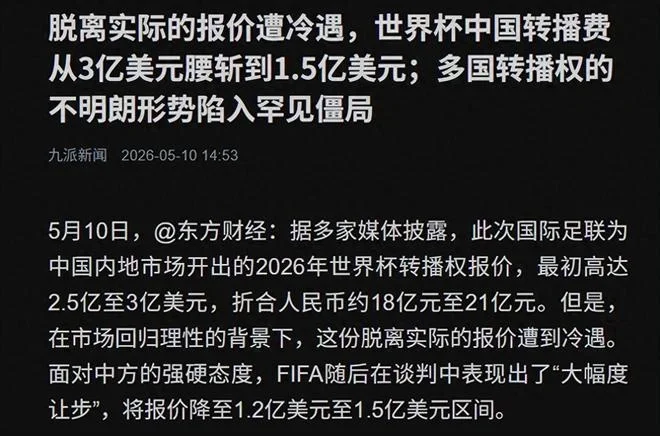
Why is China holding firm despite such a steep discount? In this high-stakes commercial standoff, who truly holds the upper hand?
The so-called 50% discount is more of a bargaining tactic than genuine goodwill. FIFA originally demanded between $250 million and $300 million for the single tournament, nearly matching the $300 million price tag for the two previous tournaments combined. China’s budget ceiling remains at $60-80 million, meaning even the reduced offer is more than double what Beijing is willing to pay. 
This is not the first time FIFA has employed such tactics. Two decades ago, China secured broadcast rights for two World Cups for just over $20 million. Since then, prices have skyrocketed. For the 2022 Qatar World Cup, a two-tournament package cost $300 million. Now, FIFA wants nearly that much for a single event. The “bargain” offered is still far from reasonable. 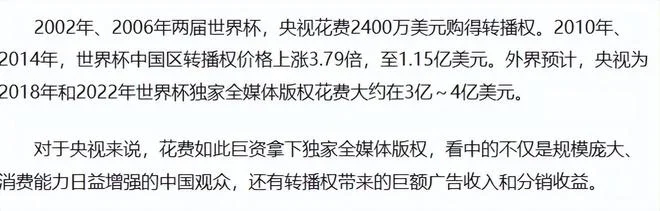
CCTV’s refusal is backed by real leverage. Four Chinese companies have already invested over $500 million in sponsorship for the 2026 World Cup, seeking brand exposure to billions of viewers at home. If CCTV does not broadcast the tournament, these sponsors will lose their domestic visibility — potentially triggering a collective claim against FIFA. This silent pressure is a powerful weapon.
Moreover, the time zone difference is a major obstacle. More than 70 of the 100-plus matches will take place between 2 a.m. and 10 a.m. Beijing time, making live viewing far less attractive compared to past tournaments. China’s domestic sports scene, including grassroots events like “Village Super League” and “Village BA,” has also gained massive popularity, reducing reliance on international spectacles.
FIFA’s pricing also reeks of double standards. While the U.S. paid nearly $500 million, the UK $350 million, Japan $200 million, and South Korea $125 million, China was asked for $120-150 million — despite having no national team participating and a severe time zone disadvantage. FIFA justified this by citing China’s large economy, but critics call it “price gouging.”
The standoff is reshaping global sports media. With a $50 billion revenue gap in FIFA’s 2023-2026 cycle, losing the Chinese market would be a severe blow. Meanwhile, China’s sports consumption has evolved — short video highlights and on-demand content now replace the need for live broadcasts. Hong Kong, for comparison, secured rights for just $25 million.
This battle is not just about money. It’s about redefining the rules of sports media rights. China’s refusal sends a clear message: no more inflated prices, no more double standards. The era of blindly chasing expensive international IPs is over. China is building its own sports culture, and the global order of sports business is being rewritten.
